
Illustrated Wall Art: Why Your Walls Deserve Better Than What the Algorithm Recommends
Updated: 6 days ago
On Generic Wall Art, Algorithmic Taste, and the Case for Hanging Something That Actually Means Something
There is a poster that has appeared on approximately four million Instagram feeds this year. You know the one. The blurry botanical print. The abstract beige watercolour. The serif motivational quote. Here is the thing about that poster: it is completely fine. Inoffensive. Competent. Entirely forgettable.
It is also on the wall of someone who looked at their blank wall, went online, scrolled for fifteen minutes, thought, "this seems fine," and clicked buy. The algorithm showed it to them because the algorithm shows it to everyone. It is popular because it is popular. It does not mean anything to the person who bought it. It will not mean anything to the person who visits their home.
This is not a criticism of anyone who has this poster. It is a description of how most people end up with walls that look decorated but do not feel inhabited. And it is the problem that Poster Shop Boys was built to solve.
The Algorithm Has Terrible Taste
Platforms surface what is popular, not what is good. Those are not the same thing.
Popular wall art is designed to appeal to the maximum number of people simultaneously. This means it has been consciously or unconsciously stripped of everything specific, everything provocative, everything that might divide opinion. The result is art that is perfectly calibrated to offend nobody — which means it connects deeply with almost nobody either.
The beige abstract watercolour does not remind you of anything. It does not reference a film you love, a place you have been, a dish you have eaten, or a cocktail you cannot stop ordering. It has been designed to be background — to fill space without competing with the furniture.
The algorithm rewards this because it works at scale. Something that 60 percent of people find pleasant will always outperform something that 10 percent of people find extraordinary. Algorithms are not optimised for intensity of feeling. They are optimised for breadth of mild approval.
This is a fine strategy for selling sofas. It is a disastrous strategy for building a wall that says something about who you are.
The Original versus the Reproduced
There is a category confusion at the heart of most online art purchasing that is worth naming clearly.
A reproduction of a famous painting is not art. It is a product. The Starry Night print you can buy for twelve pounds from almost anywhere is not art — it is a commercial object whose value comes entirely from the original work it reproduces. You are not buying a piece of culture when you buy it. You are buying a reminder that a piece of culture exists somewhere else.
Original illustrated art — even illustrated prints — is categorically different. Someone made a decision about what to draw, how to draw it, which colours to use, how to compose the image, what to leave in, and what to leave out. Those are aesthetic decisions. The result is something that did not exist before that person made it.
This is not a statement about price. An illustrated poster for twenty pounds is original art in a way that a fifty-pound reproduction of a famous painting is not. The question is not how much something costs. It is whether someone made it or whether someone reproduced it.
Your walls deserve things that were made, not things that were reproduced.
Illustrated Wall Art - What Your Walls Say About You
Walls are biographical. They tell visitors — and yourself — something about who you are, what you have experienced, and what matters to you.
This is obvious when stated plainly. Yet, most people treat their walls as a design challenge rather than a biographical one. They think about colour coordination, visual balance, and whether something will go with the sofa. These are not irrelevant considerations. But they are secondary.
The primary question about any wall art is not, "does this look nice?" It is, "is this true?" Does it reflect something genuine about the person who chose it? Does it reference an experience, a feeling, or a cultural moment that actually matters to them?
A wall that answers yes to those questions will always look better than a wall that is technically correct but emotionally empty. Taste is not really about aesthetics. It is about authenticity. The most interesting walls belong to people who put up what they actually love without worrying about whether it is the approved choice.
Five Things Worth Hanging Instead
The Film That Changed How You See the World
Not your favourite film, necessarily. The one that shifted something. The one you watched at the wrong age, and it stuck in ways you did not expect. The one you recommended to someone and then immediately worried you had misjudged them by recommending it.
That film belongs on your wall. Not because it is prestigious or critically acclaimed. Because it is yours.

Fight Club - The Narrator 
Pulp Fiction - Mia Wallace 
The Shawshank Redemption - Andy - Ellis
The Dish That Exists as a Sense Memory
Every person has a dish that does this — that immediately produces a specific, located feeling when they eat it. For some people, it is their grandmother's food. For others, it is something they ate once on a trip and spent years trying to recreate. For others, it is the thing they cook when they are trying to impress someone.
An illustrated food poster of that dish is not a generic kitchen decoration. It is a memory made permanent.
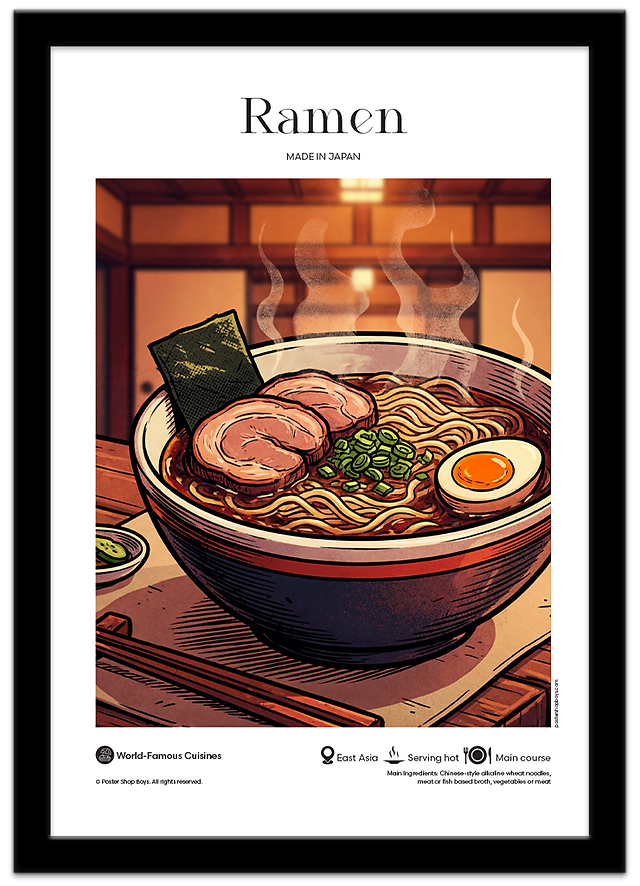
Ramen - Japan 
Sushi - Japan 
Paella - Spain
The City That Will Not Leave You Alone
Most people have one. The place they visited and did not want to leave. The city they grew up in and think about differently now that they have left. The place they moved to and could not believe was real.
A city poster is not a souvenir. It is an acknowledgement that somewhere changed you. Istanbul did that. Berlin did that. London does that to people who move there and cannot quite explain why.

Istanbul - Galata Tower 
Berlin - Berliner Fernsehturm 
London - Tower Bridge
The Cocktail That Has a Story Attached to It
Drinks are memory triggers. The cocktail you ordered on your first proper date. The one your friend made badly at a house party, and somehow it was perfect anyway. The one you learned to make properly because you decided to stop ordering it wrong.
An illustrated cocktail recipe poster is part decoration, part reference material, and part autobiography. It belongs in the kitchen or above the bar of someone who takes the pleasure of drinking seriously.

Negroni 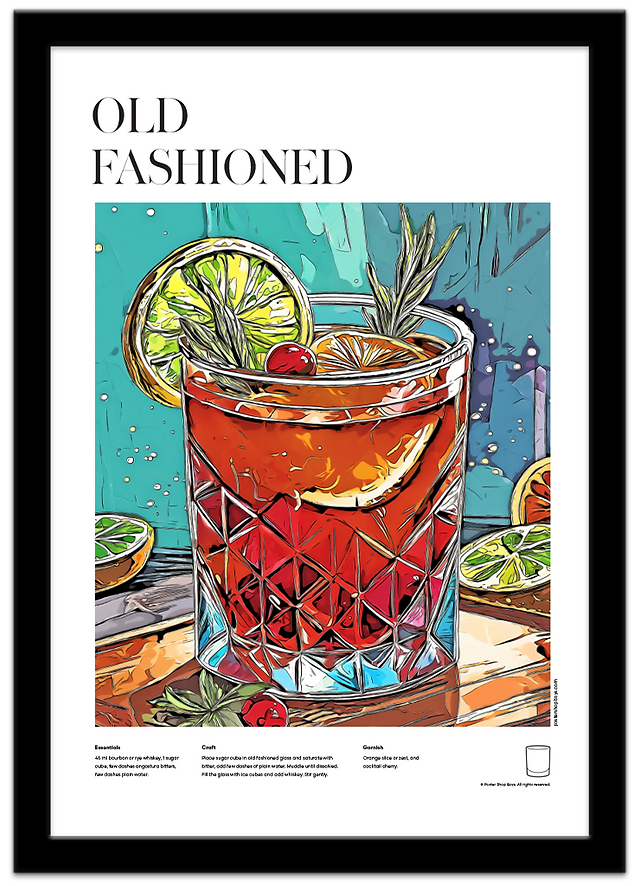
Old Fashioned 
Aperol Spritz
The Idea That Makes You Think Every Time You See It
The ArtRoom collection exists for this. Unnecessary Data. I'm OK. Eat More Art. Game Over. These are not decorative objects. They are provocations — things designed to produce a reaction every time you see them. Some mornings they are funny. Some mornings they land differently. That variability is the point.
The best wall art in the world is the kind that means something different at different points in your life. Generic botanical prints do not do this. Specific, considered original art does.

Poster Shop Boys - Eat More Art 
Poster Shop Boys - Laser Cannon Pac-man 
Poster Shop Boys - ASCII Cat & Dog
The Practical Version of This Argument
If all of this sounds abstract, here is the practical version.
Next time you are looking for illustrated wall art, start with a subject rather than an aesthetic. Do not type "neutral wall art for living room" into a search engine. Type the name of a film you love. A city you think about. A dish you eat. A cocktail you order.
Find an illustrated version of that thing. Put it on your wall. Then notice how differently it feels to look at your wall. Notice that it gives you something to think about rather than just something to look at. Notice that when people visit and ask about it, you have something to say.
That is what walls are for.
Comments